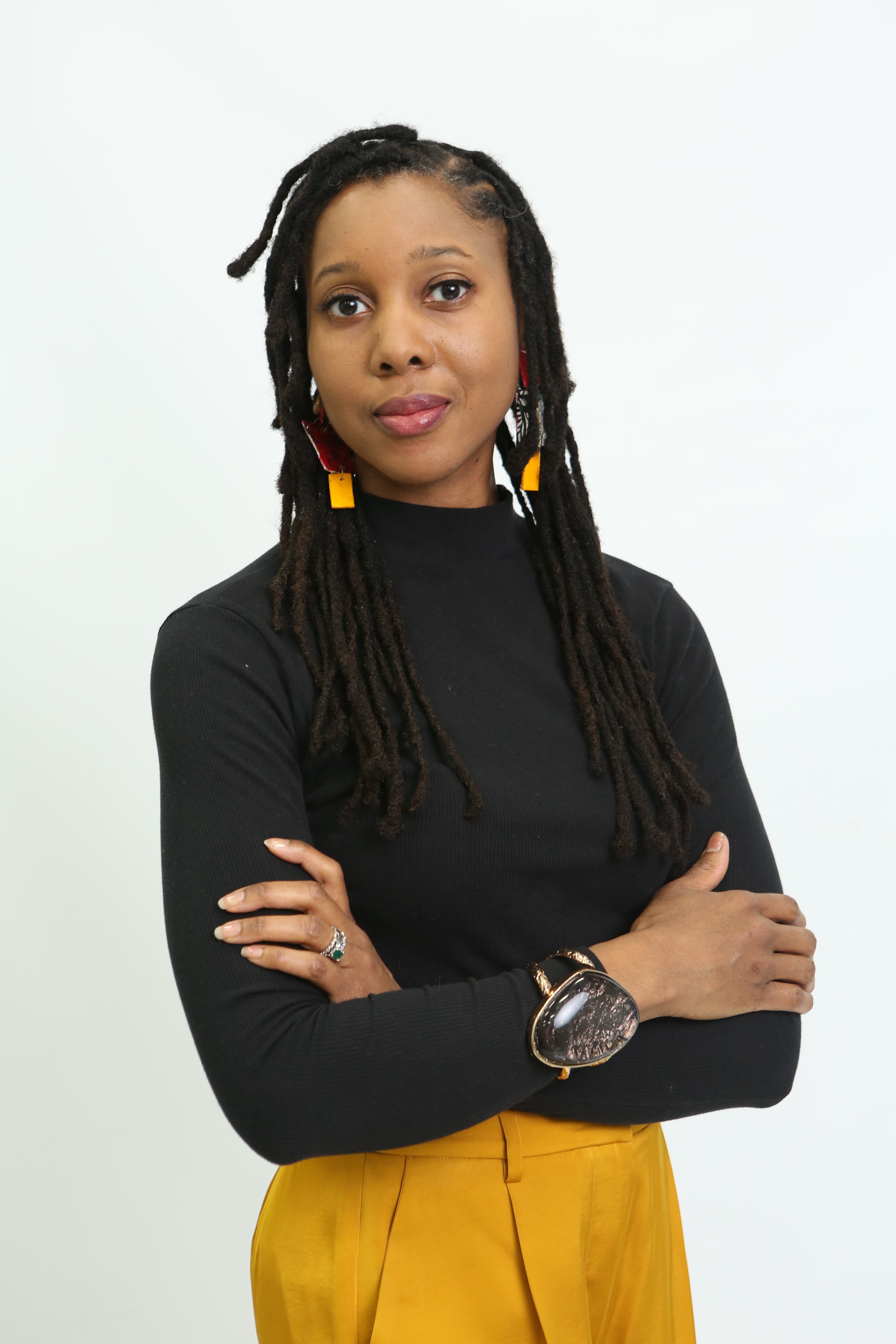
Twelve phrases doctors use, what they actually mean, and exactly what to say back.
To be a Negro in this country and to be relatively conscious is to be in a rage almost all the time.
James BaldwinIf you have ever sat in your car after an appointment, holding a piece of paper that said your labs were normal while your body kept telling you something was wrong, this is for you.
You are not imagining it. Your body is not malfunctioning. It is communicating. The problem is rarely that you are not making yourself clear. The problem is that the room was never built to hear you.
This decoder names twelve phrases I have heard in my own appointments and in the appointments of hundreds of Black women I have treated in clinic. For each one, you get the translation underneath the words, a script you can carry into the next room with you, and a few terms worth knowing before you go.
Read it slowly. Sit with the ones that hit. When you are ready to talk through what you are carrying, I am here.
You will also receive Dr. Taylor's seasonal letters on body sovereignty, healing justice, and the medicine your labs cannot read. Unsubscribe anytime.
Tap any phrase to reveal what it actually means, what to say back, and what is worth knowing before you go.
Standard lab ranges are wide, and they were built on populations that did not always look like you. "Normal on paper" can still mean depleted in a body. A basic panel often misses what a fuller picture would catch.
I hear you that the numbers are inside the normal range. I am not feeling normal in my body. Can we look at the trend over time, and is there anything more specific we can test for what I am describing?
If you have fatigue, hair changes, or weight shifts, ask whether a full thyroid panel would be helpful. A basic thyroid test usually only checks one number (TSH). A full panel adds two more (free T3 and free T4). For energy and iron, ask about ferritin, which is your iron stores, not just hemoglobin. You do not need to memorize these. Just write them down and ask.
Stress is real, and it does land in the body. But "just stress" is often a placeholder when no investigation has happened yet. Stress can be part of the picture without being the whole picture.
Stress may be part of this. Before we settle there, can you walk me through what else could be causing these symptoms, and what we would test to rule those out? I would like that noted in my chart.
Asking your doctor to document in your chart what they considered (and ruled out) is one of the most powerful things you can do. It creates a paper trail. If something is missed, that record matters.
This is the reflex prescription for a Black woman in pain, fatigue, or asking about fertility. It is rarely paired with a real workup. Weight is connected to health, but it is not a diagnosis for the symptom you walked in with.
I came in for this specific symptom. I would like you to address that first, on its own. If weight becomes part of the conversation later, we can revisit it. Right now I need help with what I am here for.
You are allowed to redirect the appointment back to the reason you came. You can also ask, "Would you give the same advice to a thinner woman with these exact symptoms?" That question alone often shifts the room.
Some discomfort is common. Pain that doubles you over, makes you vomit, soaks a pad in an hour, or sends you home from work is not normal. Black women are diagnosed late with fibroids and endometriosis in part because of this exact phrase.
What I am describing is not regular cramping. It interrupts my life. Can we look at this with imaging and rule out fibroids or endometriosis? If you do not think that is needed, I would like a referral to a gynecologist who can take a closer look.
A pelvic ultrasound is the simple imaging test that can show fibroids. Endometriosis often does not show up on imaging at all and may need a specialist referral. You do not need to know the difference. You just need to know you can ask for both.
Aging is real. Symptoms that show up suddenly or interrupt your sleep, your bowels, your cycle, or your thinking have a cause. Age is a context. It is not a diagnosis.
I understand my body is changing. I am asking what specifically is driving this and what we can rule out. Would you order the same workup for a younger woman with these symptoms? If yes, I would like that workup.
The phrase "the same workup you would order for a younger woman" is one of the most useful sentences you can carry into a doctor's office. It quietly checks for age bias without an argument.
Age is a poor screen for serious illness. Young Black women die of conditions doctors did not investigate because they assumed youth was protective.
I am young. Something has changed. I am asking you to take this seriously and to write what I am describing in my chart today. If you decide a workup is not needed, I would like that decision and your reasoning written down too.
You have the right to request that any doctor's decision not to test or treat is documented in your chart, with their reasoning. Most doctors will not refuse this. The act of asking changes the conversation.
Anxiety can look like many physical conditions, and many physical conditions can look like anxiety. Thyroid issues, low iron, heart rhythm changes, and hormonal shifts can all feel like anxiety. Anxiety as the final answer requires the rest to be ruled out first.
Anxiety might be part of this, but I want to make sure we are not missing something else first. Things like thyroid issues, low iron, or hormonal shifts can feel a lot like anxiety. Can we test for those before we settle on anxiety as the answer?
If you have racing heart or palpitations, ask whether a holter monitor (a small heart-rhythm recorder you wear for a day or two) would be helpful. If you have unexplained fatigue or panic-like episodes, the thyroid panel and iron stores from #1 apply here too.
Sometimes appropriate. Often a delay. Watching is a real strategy when it has a plan. Without one, it is just waiting.
I am open to monitoring this. Can we be clear about what we are watching for? What symptoms would mean we need to do more, and what timeline are we on? I would like to schedule the follow-up before I leave today.
Always book the follow-up appointment before you leave the room. "We will call you" turns into months. A scheduled date on the calendar is a kept promise.
This is a quiet accusation that you are exaggerating. Black women's pain is consistently undertreated, and the studies on this go back decades.
I am the only person in this room inside this body. The pain is what I am telling you it is. I am asking you to treat the pain and find out what is causing it. Please write my pain level in my chart as I described it.
The 0-to-10 pain scale is the most common shorthand. If saying a number feels strange, describe what it stops you from doing. "I cannot drive," "I cannot sleep," "I had to leave work" are concrete and harder to dismiss than a number.
This is a falsehood with a long history in American medicine, traceable directly to experiments performed on enslaved Black women without anesthesia. It is the reason Black women are still undermedicated today. Naming it stops the sentence in its tracks.
That belief has been used to undertreat Black patients for a long time, and the research does not back it up. I would like the same care and the same pain management you would offer any other patient with my symptoms.
If a comment like this lands in the room, you can ask for it (and your response) to be added to your chart. You can also ask to see a different provider. You are not required to finish the appointment with someone who has said this to you.
This is the Strong Black Woman script weaponized inside a medical setting. Praise for your endurance is not the same thing as treatment for your symptoms.
I am here because I should not have to handle this alone. I am asking for medical care, not encouragement. What is the next step, and when can we schedule it?
"What is the next step?" is a complete sentence. You do not have to soften it, justify it, or apologize for asking it.
Hormones are a reasonable thing to consider. They are not a conclusion. "Hormonal" without testing is a conversation closer dressed up as a diagnosis.
If you suspect it is hormonal, can we test it? I would like a hormone panel done at the right time in my cycle, and a thyroid panel as well. If your office does not offer that, can you refer me to someone who does?
A hormone panel usually checks several hormones together: estrogen, progesterone, and others. The timing in your cycle matters because hormone levels shift week to week. If you still cycle, ask which day of your period to schedule the blood draw. You do not have to know the answer. You just have to know it is the right question.
Who am I?
Hey love. I am Dr. Jennifer Taylor. Born in 84, raised on Maxwell and Mary J, and somehow ended up with a Doctor of Acupuncture degree after years in cancer biology research.
I am the practitioner who can show women the holes in their wellness protocols while revealing just how capable their body already is.
The decoder is a starting place. The longer work is rebuilding the relationship between you and the body you have been taught to override. The Five Element Method is how I teach women to read their own physiology through the seasons, the cycle, and the elements, so they stop outsourcing their healing and start trusting the brilliant, self-correcting body they already have.
If something in this decoder named your life, come closer.
Visit 5emethod.com